

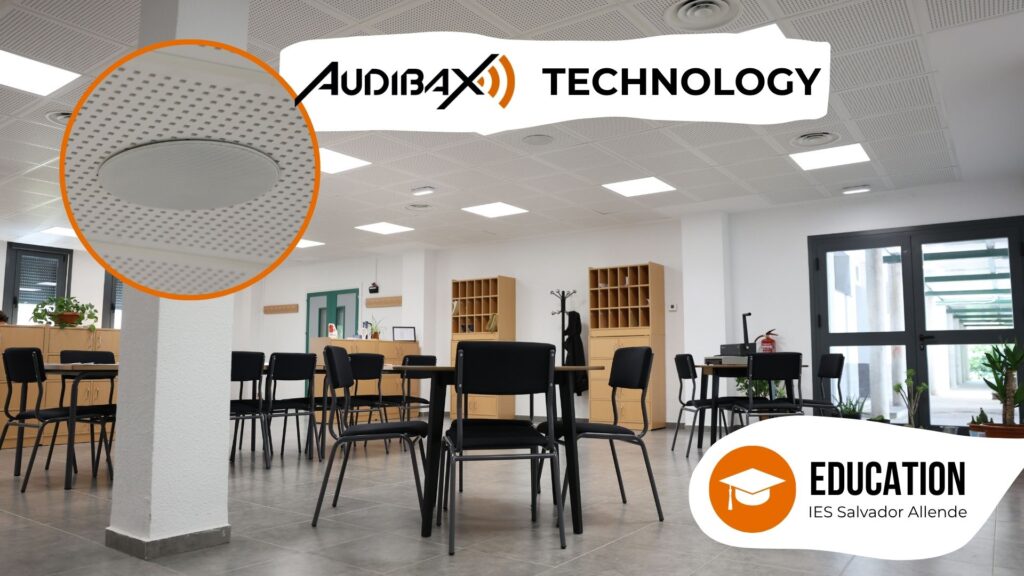
In the audiovisual integration sector, one of the biggest challenges is demonstrating the viability and reliability of equipment in high-usage environments. The recent project carried out at IES Salvador Allende is the perfect example of how Audibax professional public address technology offers a robust, scalable, and high-quality solution for educational institutions, implemented in accordance with strict professional standards.
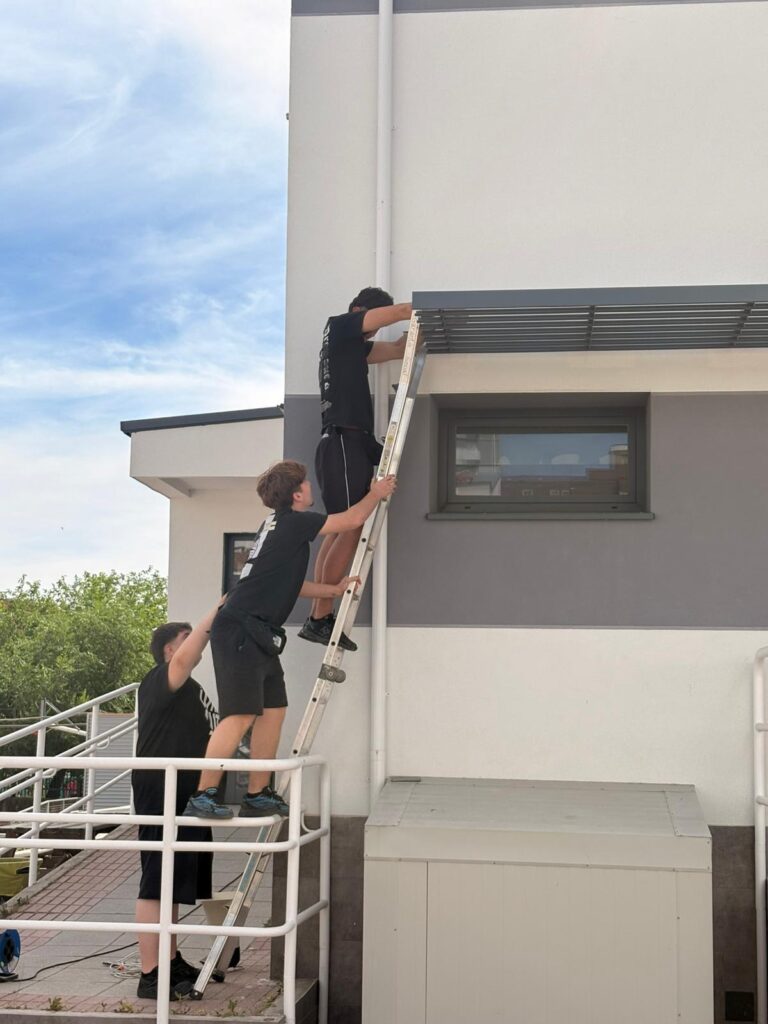
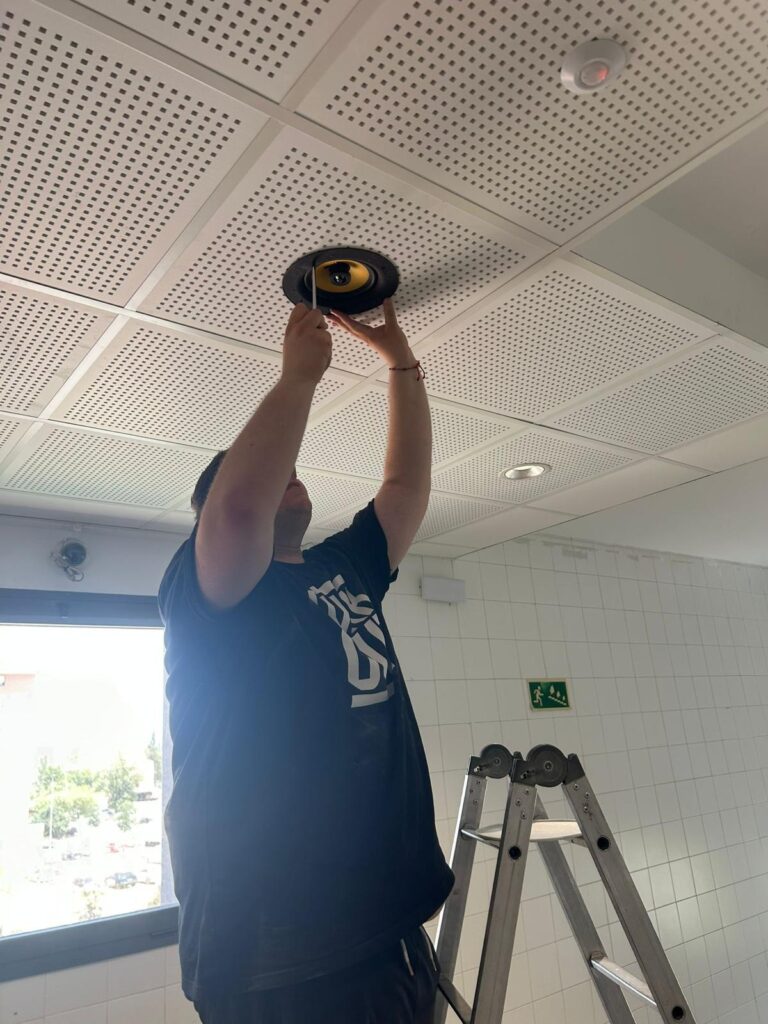
Students in the Telecommunications and Computer Systems program were responsible for designing and installing a complete high-impedance (100V) public address system in Building B of the school, transforming a real-world need into a successful technical case study.
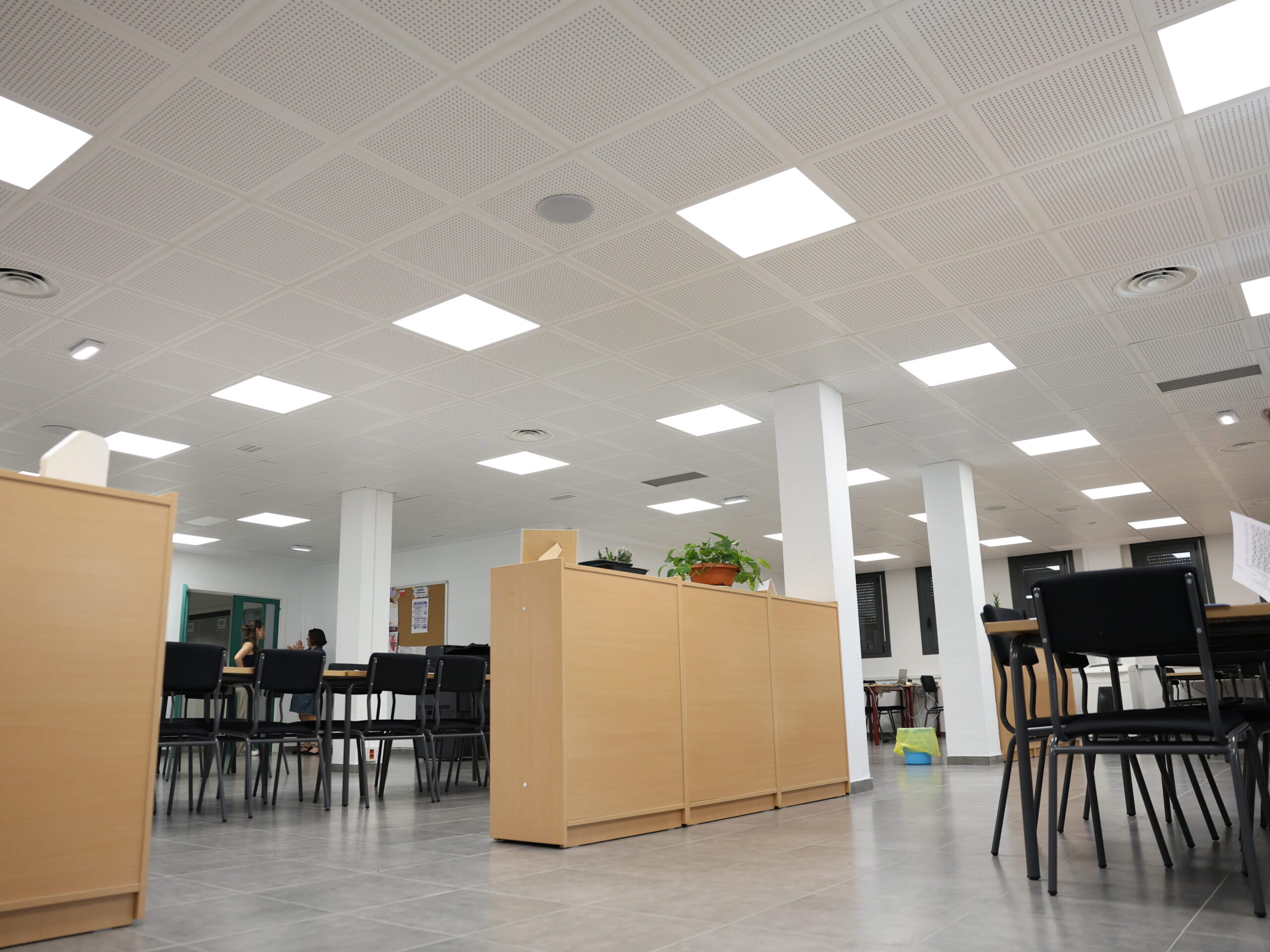
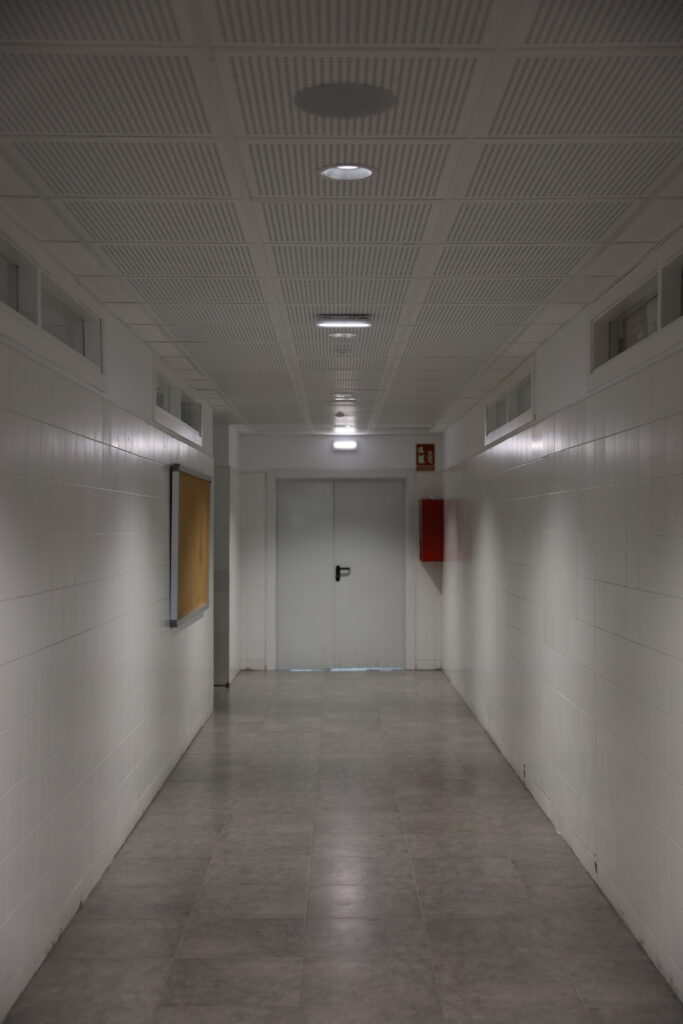
The Challenge: Providing Acoustic Connectivity in an Educational Setting
Until the start of this project, Building B at the high school lacked an internal communication system, which made it difficult to manage general announcements and evacuation or emergency protocols.
Far from proposing a theoretical simulation, the team tackled the challenge as a professional audiovisual integrator, covering all phases of the project:
- Needs analysis and acoustic study of the building.
- Architectural design of the system and selection of professional audio equipment.
- Preparation of blueprints, load calculations, and budgets.
- Physical installation, wiring, and commissioning.
All of this was carried out under the technical guidance of the school’s teachers, but with a high degree of autonomy on the part of the students.
Why choose a high-impedance (100V) public address system?
The choice of a 100V public address system addresses the critical needs of large facilities (schools, hospitals, shopping centers). After analyzing the space, Audibax speakers and 100V line systems were selected for their technical advantages:
- Minimal signal loss: Allows for long cable runs without voltage drops.
- Simplified parallel connection: Facilitates the installation of multiple speakers on a single line.
- Cost-effective scalability: Reduces cable gauge costs and simplifies future system expansions.
- Noise immunity: Minimizes electromagnetic interference common in public buildings.
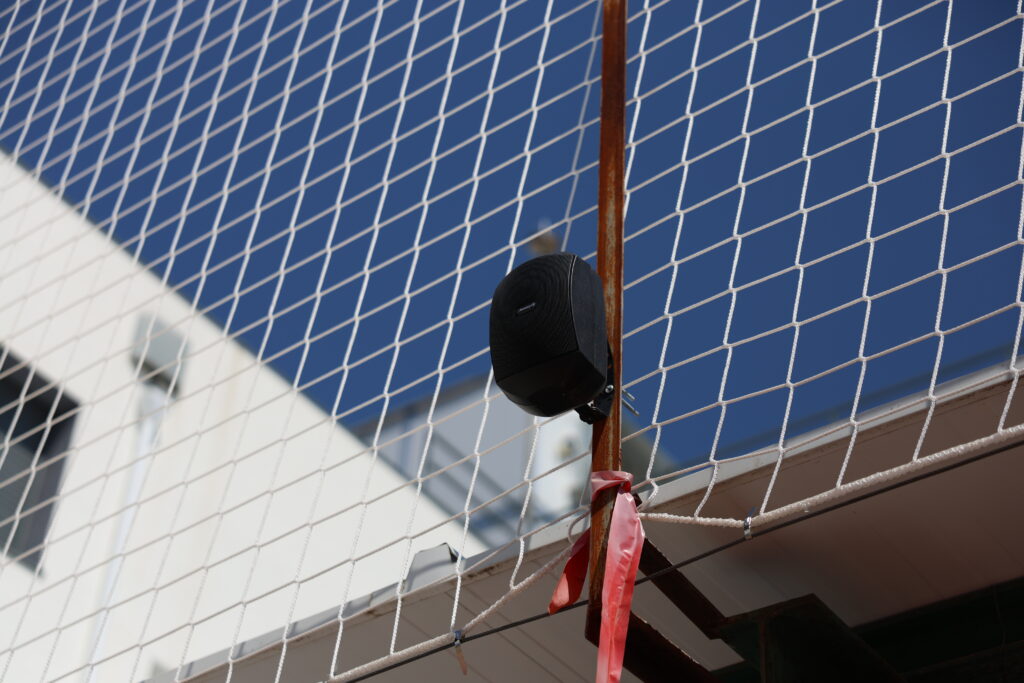
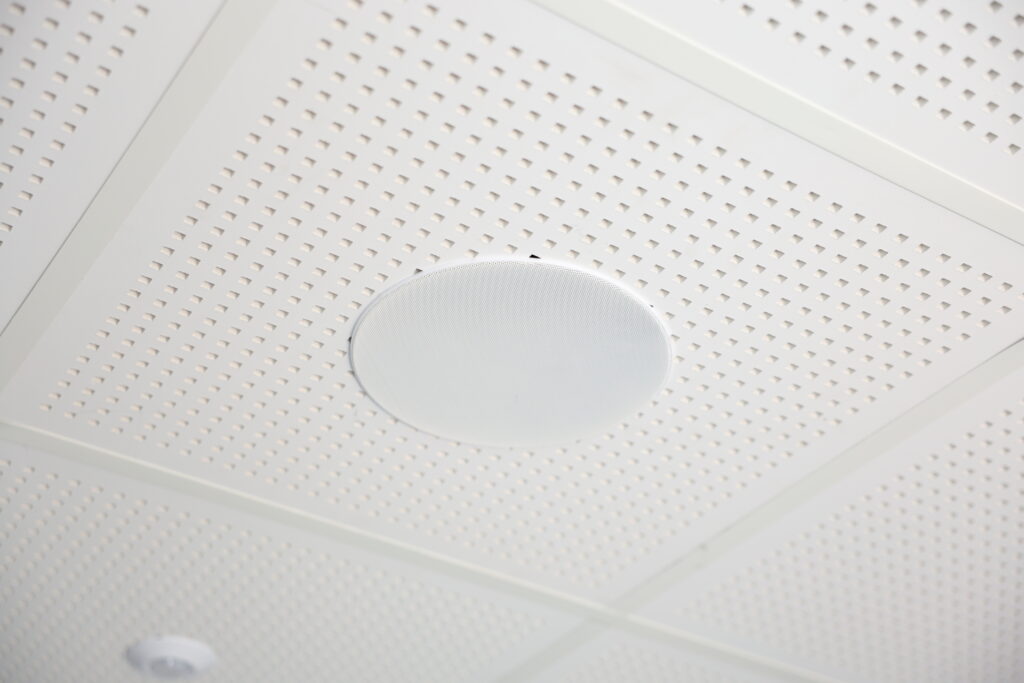
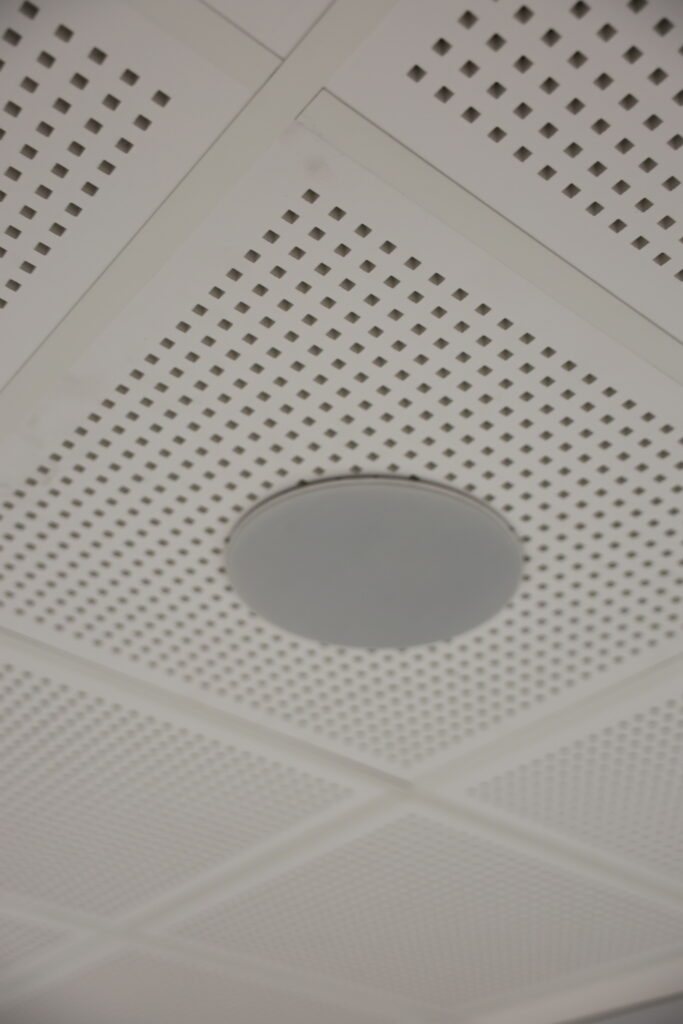
The final installation features 14 strategic broadcast points, combining recessed ceiling speakers and outdoor sound projectors to ensure uniform acoustic coverage.
Acoustic Engineering: Planning and Technical Rigor
The success of the installation depends on the preliminary engineering phase. In the absence of updated blueprints, on-site measurements were taken to accurately calculate the system requirements:
Technical calculations performed:
- Power losses per meter of cable run.
- Estimation of sound pressure level (SPL) and required power per floor.
- Balanced load distribution per amplifier channel.
- Design of independent signal paths to prevent interference.
The entire process was managed using a Gantt chart, ensuring compliance with delivery deadlines and resource management typical of an actual construction project.
Hands-On Installation: Learning by Doing
The installation phase took place over several days of intensive work:
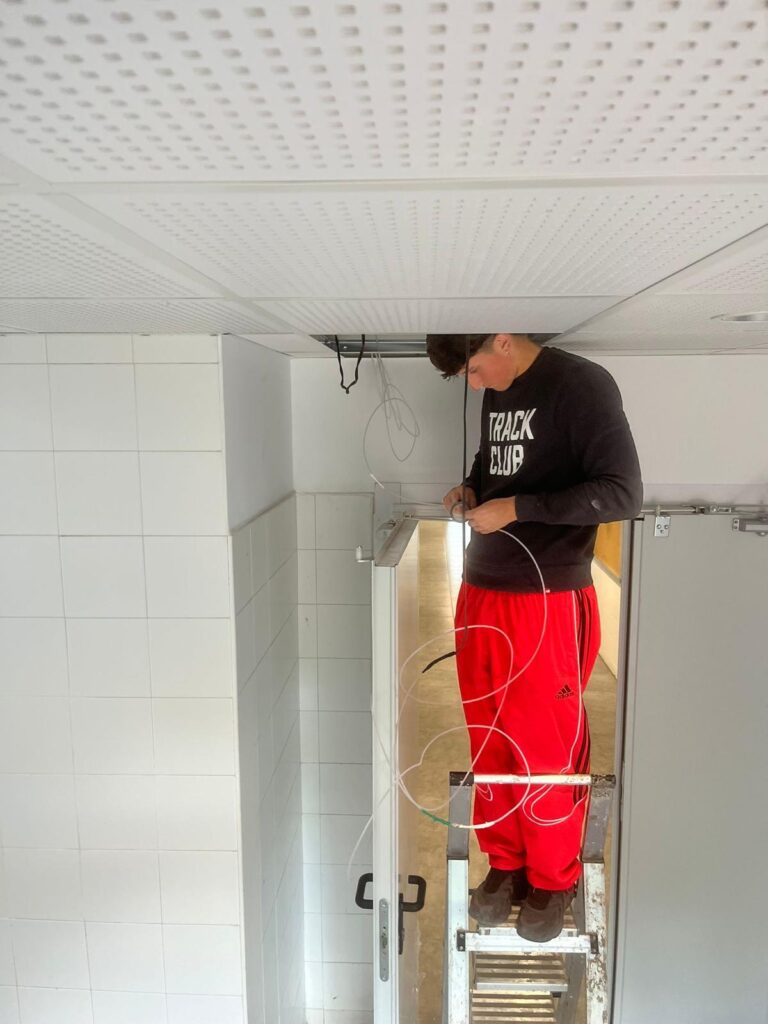
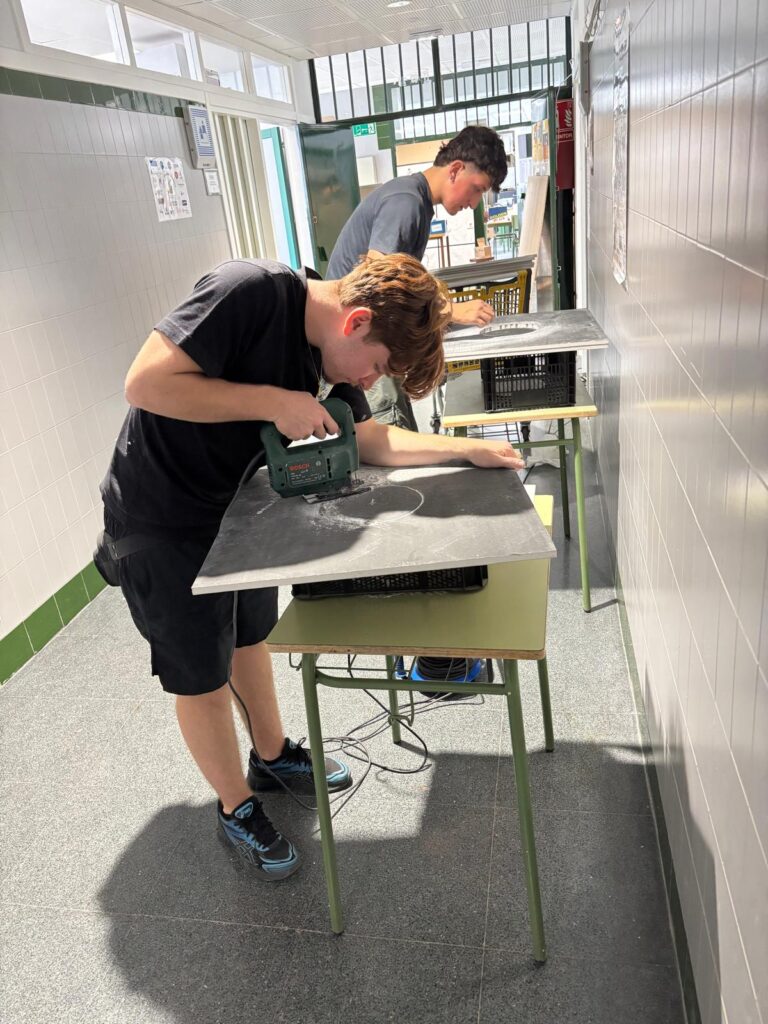
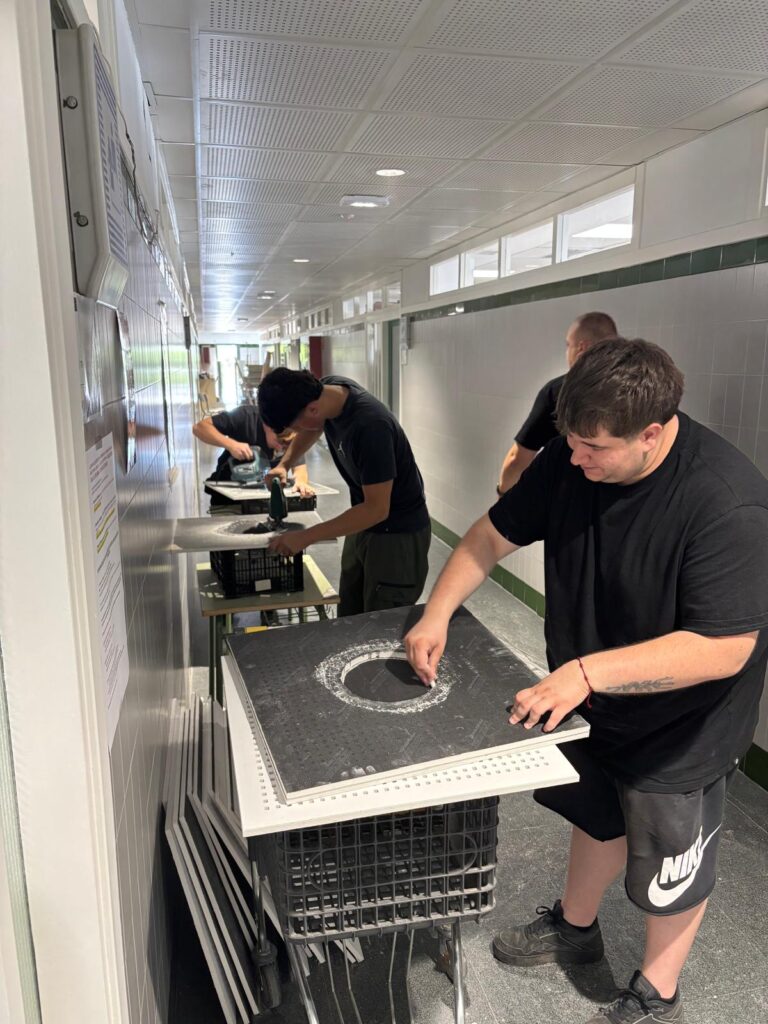
- Running cables through drop ceilings and conduits
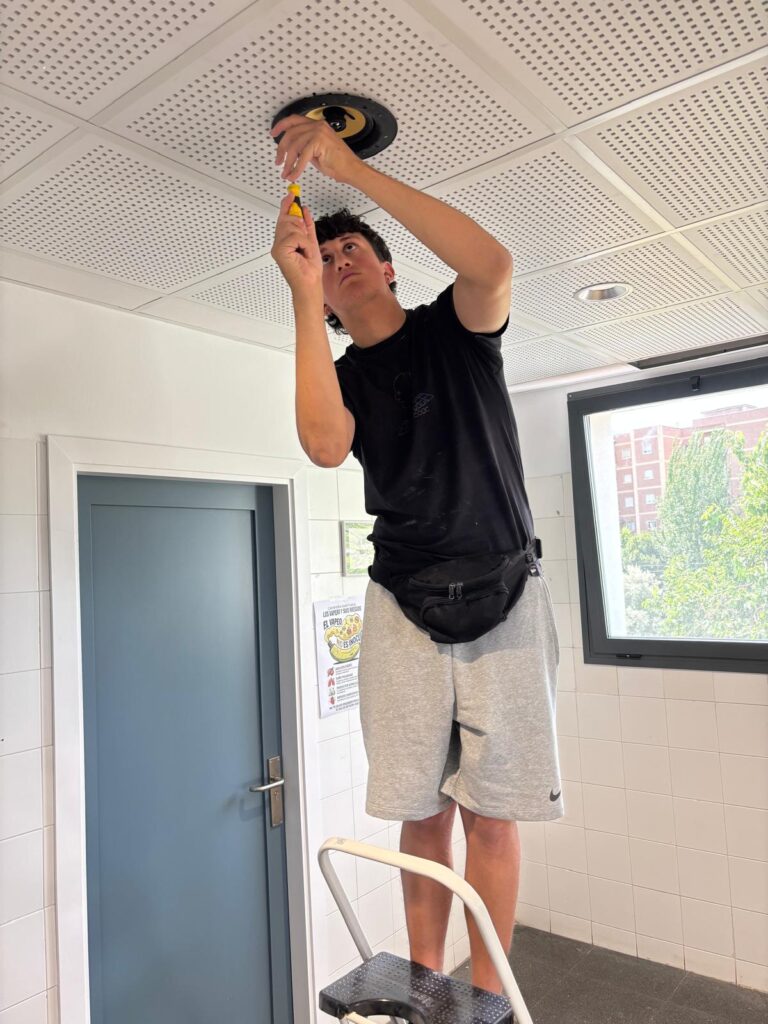
- Installing and connecting recessed speakers and sound projectors
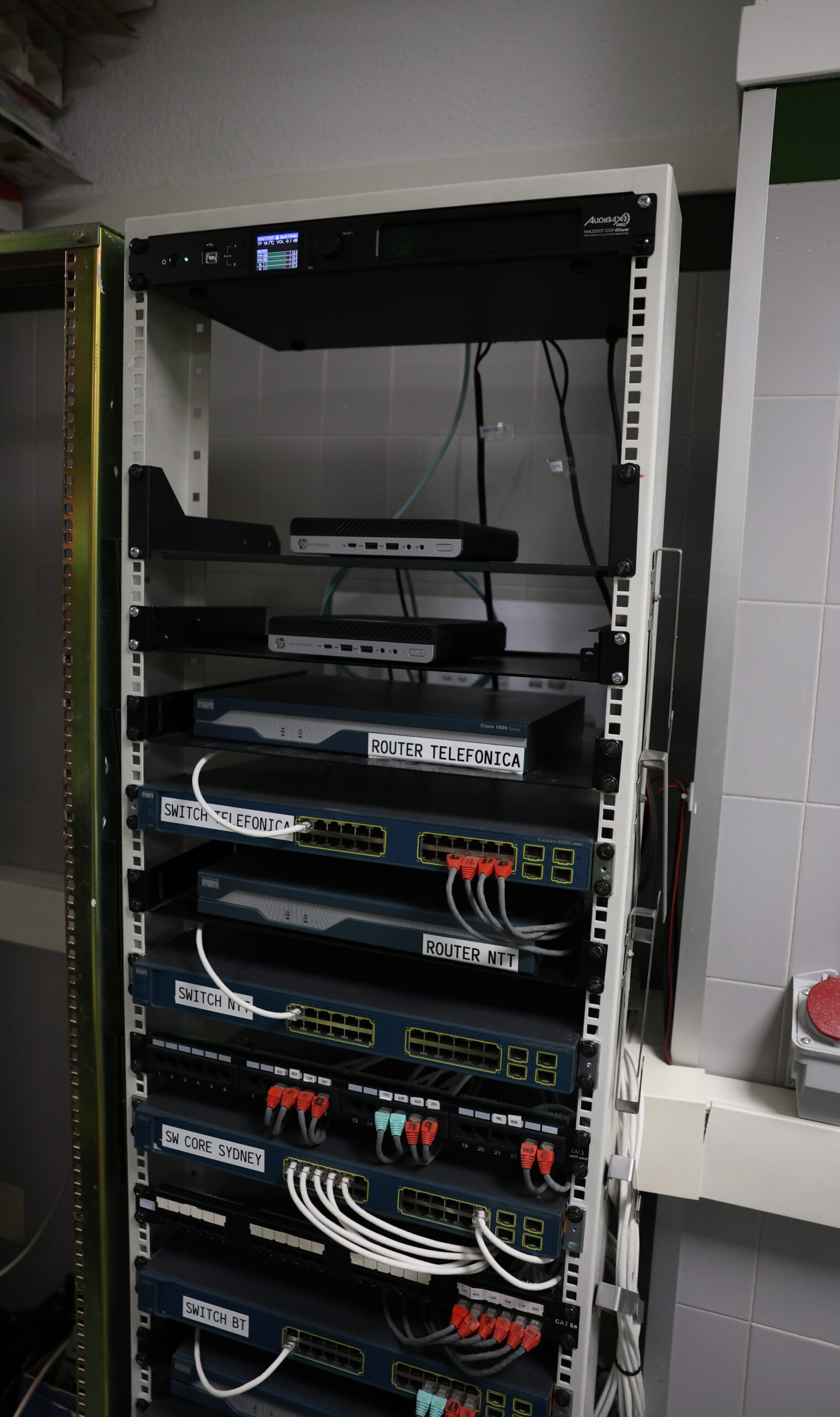
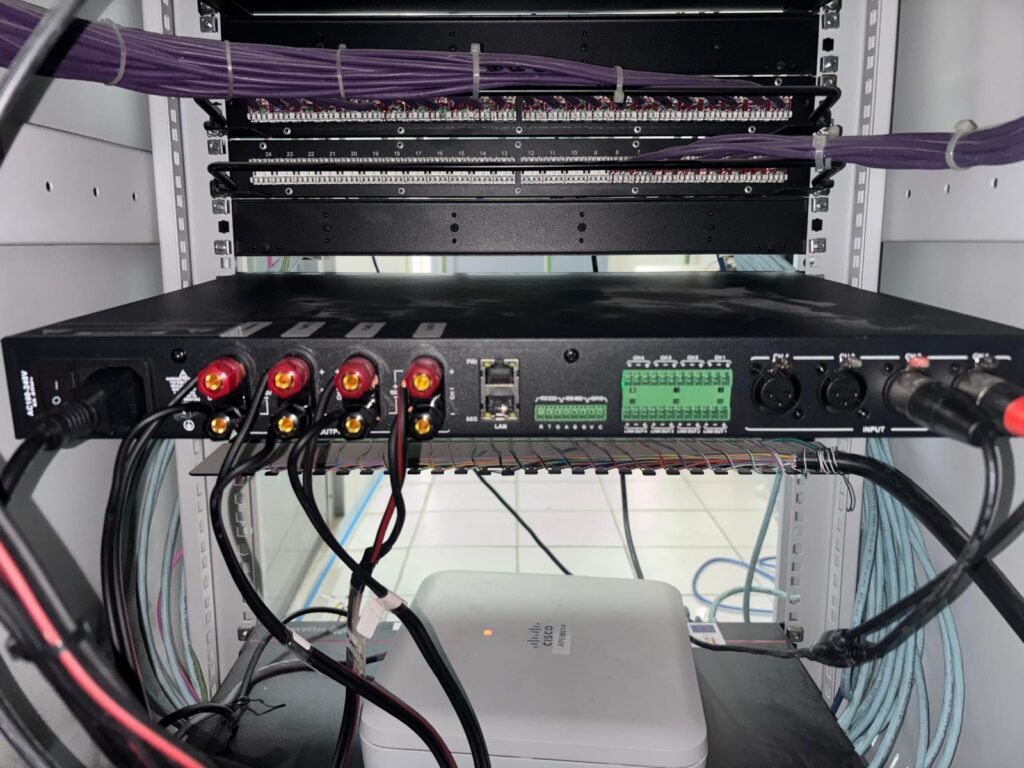
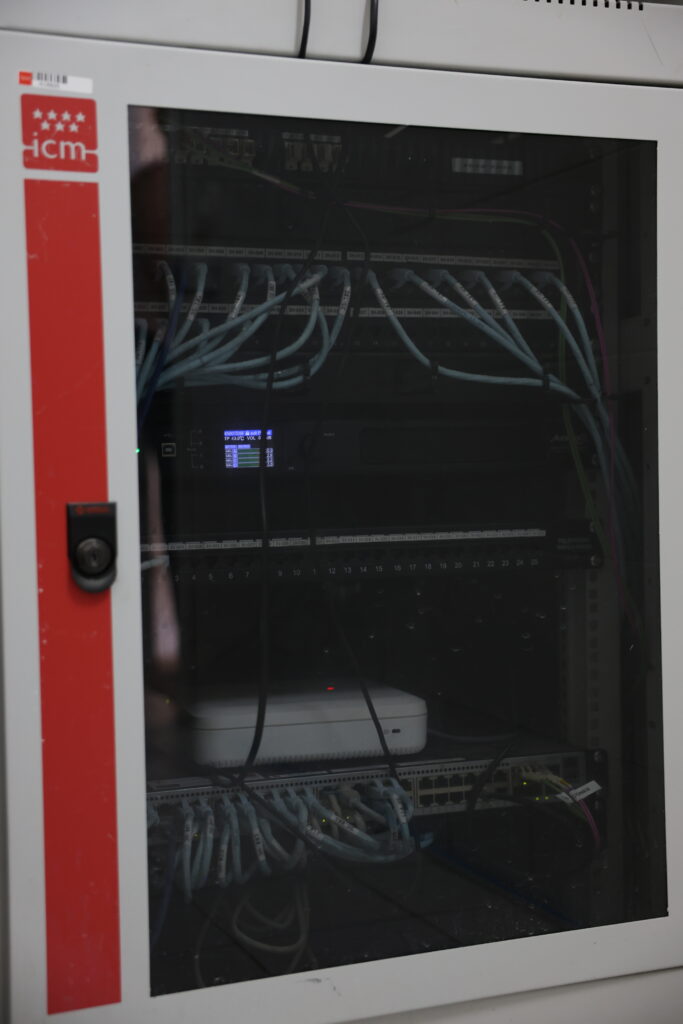
- Centralizing the system in a rack, organizing and tidying it up
- Sound checks and system verification
Far from being a simulation, the students worked with real-world scenarios: challenging ceilings, overcrowded conduits, managing cable lengths, secure mounting, and final operational checks.
This type of experience is what truly prepares students for the workplace, where every decision has real technical consequences.
Audibax Professional Equipment
To ensure maximum durability and system performance, all major equipment was purchased through a leading distributor in the professional audio sector in Spain.
The system configuration includes:
- Audibax ceiling speakers and sound projectors: Designed to provide high speech intelligibility and clear reproduction of announcements.
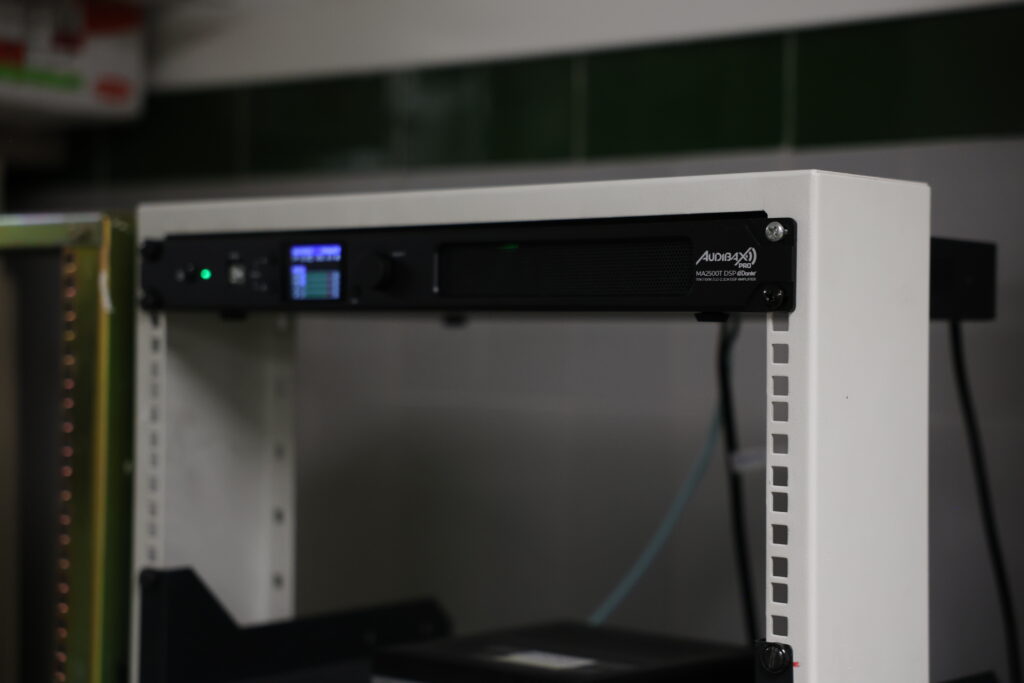
- Amplification and signal processing: Centralized in a communications rack, ensuring protection of the amplifiers and efficient zone management.
“Working with a specialized supplier and brands like Audibax ensures the project’s success. You not only get equipment of proven quality, but also the guarantee of compatibility, technical support, and long-term reliability that a public building requires,” emphasize the project’s technical supervisors.
A Forward-Looking Infrastructure: Integration with Networked Audio (Dante)
This installation is not a standalone project, but rather the first phase of a scalable infrastructure. The current high-impedance design has been planned to accommodate a future migration to networked audio (Dante), which will enable full centralization and digital control of the center’s audio ecosystem.
This project demonstrates that the combination of professional equipment such as Audibax, expert advice from leading distributors like Madrid HiFi, and rigorous technical execution results in top-tier commercial audio infrastructures built to last.
Equipment Installed
- 17 x Audibax CS6T 60W RMS Ceiling Speaker
- 1 x Audibax Ovo 4 Black
- 1 x Audibax Pro M88 WP22IODN Dante Control Panel
- 1 x Audibax Pro MA4500T Dante DSP
- 1 x Audibax Pro MA2500T Dante DSP
- 1 x Audibax BMG20 Conference Microphone
- 1 x Audibax ACT1 Multi-Connection Cable Tester
- 1 x Audibax Pro R22i Dante
Training That Leaves a Lasting Impact
Installing a functional public address system at your own high school isn’t just a technical exercise—it’s a way to give back to the educational community what you’ve learned, and to demonstrate that vocational training can produce real-world solutions that meet professional standards.
And, above all, it’s the best way to learn.